

A comprehensive guide to Bone Marrow Transplant (HSCT) in Turkey. Learn about the types, stages, CAR-T cell therapies, and expert care at Turkey Healthcare Group.
Bone Marrow Transplant in Turkey: A Comprehensive Guide to Causes, Types, and Advanced Cellular Therapies
In the complex symphony of the human body, few organs carry the same importance as bone marrow—yet it is often underestimated. This spongy tissue, located within the cavities of bones, functions as a biological factory for blood cell production. It produces red blood cells that carry oxygen, white blood cells that fight infection, and platelets that enable clotting.
When this vital system is disrupted by disease, genetic disorders, or damage caused by treatments such as chemotherapy, the consequences can be severe. Fortunately, modern medicine offers a powerful therapy: Bone Marrow Transplantation (BMT), also known as Hematopoietic Stem Cell Transplantation (HSCT).
Bone marrow transplantation is not merely a medical procedure; it represents a profound biological reset, an opportunity to rebuild a damaged blood and immune system from the ground up. Since its first successful application in the 1950s, the procedure has evolved from a high-risk experiment into a cornerstone therapy for dozens of life-threatening conditions, including leukemia, lymphoma, aplastic anemia, sickle cell disease, and certain inherited immune deficiencies. Today, tens of thousands of patients worldwide undergo this complex treatment each year, often as their last chance for survival.
This article explores the science of bone marrow transplantation, its history, types, procedures, risks, and future. It also examines the biological mechanisms that make transplantation possible, the precise process of donor selection, and the challenging yet life-saving journey patients experience, along with the ethical and logistical challenges that continue to shape the field.
By understanding transplantation in its full context, we can appreciate its clinical significance and the remarkable regenerative capacity of the human body alongside the ingenuity of modern medical science. At Turkey Healthcare Group, we are dedicated to providing these life-saving therapies with excellence.
Bone Marrow Science and Hematopoiesis
To understand bone marrow transplantation, one must first recognize its role in normal human physiology. Hematopoiesis is the continuous process of blood cell production and occurs primarily within adult bone marrow, particularly in the pelvis, sternum, vertebrae, and ribs.
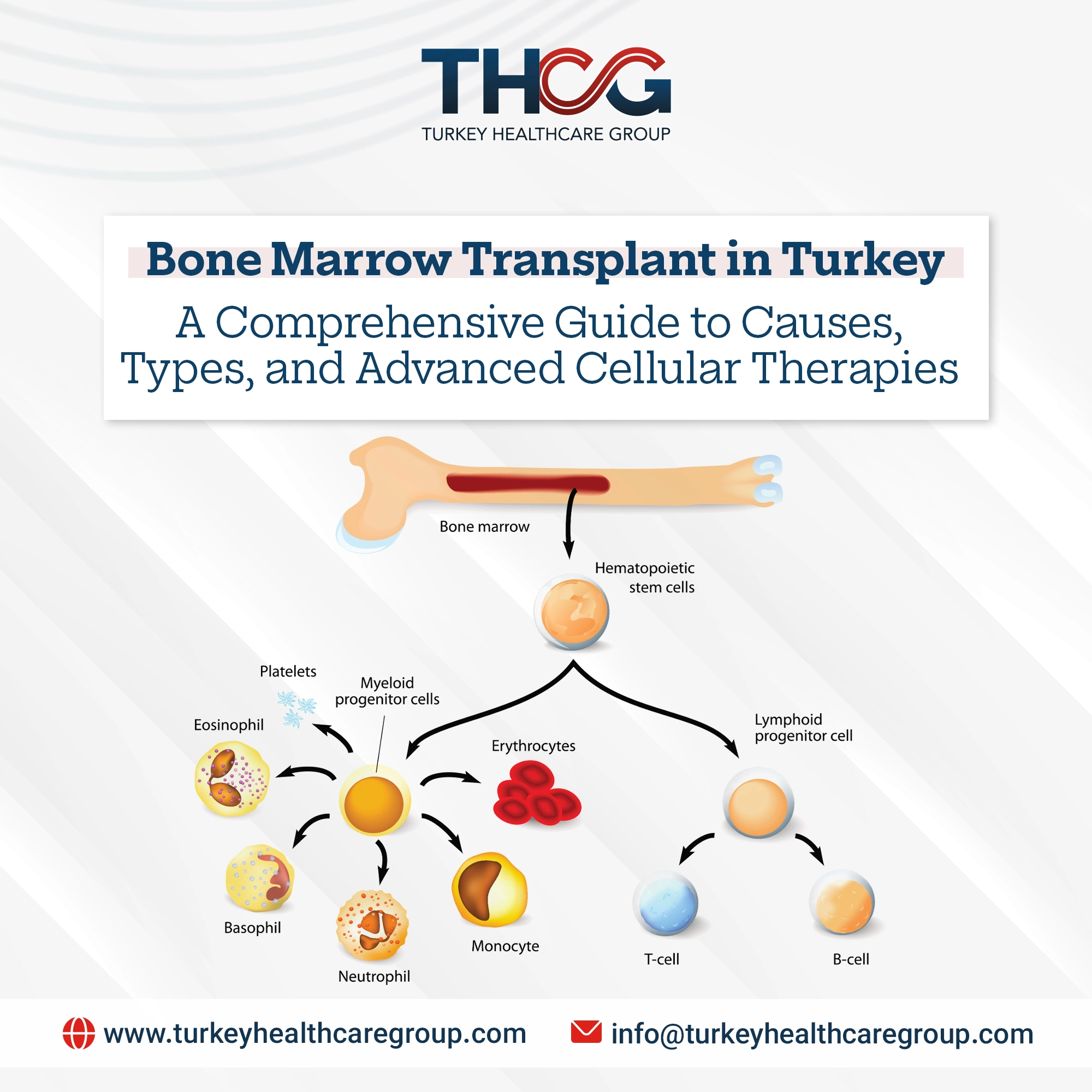
At the heart of this process are Hematopoietic Stem Cells (HSCs), rare but powerful cells capable of self-renewal and differentiation into all mature blood cell types.
These cells are multipotent, meaning a single cell can produce the myeloid lineage (which becomes red blood cells, platelets, and most white blood cells such as neutrophils and monocytes) and the lymphoid lineage (which develops into T cells, B cells, and natural killer cells). This dual capacity ensures a continuous supply of oxygen carriers, infection fighters, and clotting factors throughout life.
When this system fails—whether due to overcrowding by malignant cells as in leukemia, marrow destruction as in aplastic anemia, or abnormal cell production as in sickle cell disease—the entire body is placed at risk. Anemia, bleeding, and life-threatening infections may develop. In such cases, replacing diseased marrow with healthy stem cells can restore normal blood production and often cure the disease.
When Did Bone Marrow Transplantation Begin?
The journey of bone marrow transplantation began after World War II, driven by attempts to understand and treat radiation sickness. Scientists observed that exposure to high doses of radiation destroyed bone marrow and caused fatal declines in blood cells. In the 1950s, researchers such as Dr. E. Donnall Thomas began experiments in animals and later humans, injecting healthy marrow to restore blood production after radiation exposure.
The first successful human transplant took place in 1956 between identical twins, one of whom had leukemia. Because of their complete genetic match, no immune rejection or graft-versus-host disease (GVHD) occurred—one of the most dangerous complications of transplantation. Dr. Thomas later received the Nobel Prize in Medicine in 1990 for this pioneering work.
During the 1970s and 1980s, major advances in HLA tissue typing, immunosuppressive drugs, and infection control enabled transplants from unrelated donors. The establishment of international donor registries, such as the National Marrow Donor Program (Be The Match) in 1986, expanded access to donors and transformed transplantation from a rare therapy into a treatment available to thousands of patients.
Today, more than 50,000 hematopoietic stem cell transplants are performed annually worldwide, with improving survival rates thanks to better supportive care, refined conditioning protocols, and deeper immunological understanding. You can read more about recent breakthroughs in our Medical Articles section.
Types of Bone Marrow Transplantation
Transplants are generally classified based on the source of stem cells and the donor-recipient relationship.
1. Autologous Transplant
Stem cells are collected from the patient, frozen, and later returned after intensive chemotherapy or radiation. This type is commonly used for multiple myeloma, certain lymphomas, and some solid tumors.
Advantages
- No risk of graft-versus-host disease
- Immediate availability of cells
Disadvantages
- Possible reinfusion of cancer cells
- No graft-versus-tumor immune effect
2. Allogeneic Transplant
Stem cells come from a genetically matched donor (sibling, unrelated donor, or cord blood). This type is used for leukemia, bone marrow failure, and genetic disorders.
Advantages
- Potential graft-versus-leukemia (GVL) effect that helps eliminate cancer cells
Disadvantages
- Higher risk of GVHD, rejection, and severe infections
Other Allogeneic Transplant Types
- Matched Sibling Donor (MSD): Gold standard with best success rates
- Matched Unrelated Donor (MUD): Found via global registries, outcomes improved with precise HLA typing
- Haploidentical Transplant: Half-matched family donor; once risky but now highly successful
- Cord Blood Transplant: Uses umbilical cord blood; lower GVHD risk but fewer cells
Stages of the Bone Marrow Transplant Process
Transplantation is a multi-stage journey that may last months or years. Our specialized departments ensure every stage is meticulously managed.
1. Pre-Transplant Evaluation
Patients undergo comprehensive testing to assess organ function, detect infections, and evaluate psychological readiness. The goal is to ensure the patient can tolerate intensive therapy.
2. Donor Selection and Stem Cell Collection
Donors are identified through HLA testing to achieve the closest possible match (10/10 or 12/12).
Collection methods
- Bone marrow harvest under general anesthesia from pelvic bones
- Peripheral blood stem cells (PBSC) after stimulation with growth factors such as filgrastim
- Umbilical cord blood collected at birth and stored in specialized banks
3. Conditioning Regimen
The goals are to:
- Destroy cancerous or diseased cells
- Suppress the immune system to prevent rejection
- Create space for new cells to engraft
Conditioning may be myeloablative (high-dose) or reduced-intensity, depending on patient condition.
4. Stem Cell Infusion (Day 0)
Stem cells are infused intravenously like a blood transfusion. They travel through the bloodstream and engraft in the bone marrow within 2–6 weeks.
5. Post-Transplant Recovery
The first 100 days are the most critical due to severely weakened immunity.
Major complications include:
- Infections: bacterial, viral (CMV, EBV, adenovirus), or fungal
- Graft-versus-host disease (GVHD) affecting skin, liver, and intestines
- Engraftment syndrome
- Organ toxicity (liver, lungs, kidneys)
- Disease relapse
Long-term follow-up monitors late effects such as secondary cancers, infertility, endocrine disorders, and chronic GVHD.
Indications for Bone Marrow Transplantation
Bone marrow transplantation is performed to treat a wide range of medical conditions, which can be classified as follows:
1. Malignant Disorders
- Acute Myeloid Leukemia (AML)
- Acute Lymphoblastic Leukemia (ALL)
- Chronic Myeloid Leukemia (CML)
- Myelodysplastic Syndromes (MDS)
- Hodgkin and Non-Hodgkin Lymphoma
- Multiple Myeloma
- Myelofibrosis
2. Non-Malignant Hematologic Disorders
- Severe Aplastic Anemia
- Fanconi Anemia
- Beta Thalassemia Major
- Sickle Cell Disease
3. Primary Immunodeficiency Disorders
- Severe Combined Immunodeficiency (SCID) — the “Bubble Boy Disease”
- Wiskott–Aldrich Syndrome
- Chronic Granulomatous Disease
4. Inherited Metabolic Disorders
- Hurler Syndrome (Mucopolysaccharidosis I)
- Adrenoleukodystrophy
- Krabbe Disease
In many of these conditions, bone marrow transplantation represents the only potential curative treatment. For example, in sickle cell disease, a successful transplant can eliminate painful crises and prevent organ damage. In SCID, transplantation restores immune function and allows the child to grow normally.
Challenges and Ethical Considerations
Despite its life-saving potential, bone marrow transplantation faces major challenges:
1. Donor Availability
Only about 30% of patients have a fully matched sibling donor. The remaining 70% rely on unrelated donors, but the lack of ethnic diversity in donor registries remains a significant barrier. Patients of non-European ancestry often struggle to find matches due to underrepresentation in global databases. International efforts aim to increase diversity, but cultural, logistical, and financial barriers persist.
2. Cost and Accessibility
Bone marrow transplantation is among the most expensive medical procedures and requires highly specialized centers and expertise. Access remains very limited in low- and middle-income countries, and even in wealthy nations, disparities exist based on insurance coverage, location, and socioeconomic status.
3. Ethical Issues
Ethical debates arise around the concept of the “savior sibling”—a child conceived through IVF and genetic selection to be a donor match for a sick sibling. While this practice has saved lives, it raises questions about using a human as a means to an end and issues of informed consent.
Similarly, the use of public versus private umbilical cord blood banks sparks debate between altruism and commercialization.
Scientific Advances and Future Perspectives
The field of bone marrow transplantation is rapidly evolving thanks to advances in genomics, immunology, and cellular engineering utilizing the latest medical technologies.
1. Gene Therapy and Gene Editing
For genetic diseases such as SCID and sickle cell disease, mutations can now be corrected in a patient’s own stem cells outside the body and re-transplanted, eliminating the need for a donor. CRISPR-based therapies have already entered clinical trials with remarkable results.
2. CAR-T Cell Therapy
Although not a traditional transplant, CAR-T therapy uses genetically modified T cells to attack cancer. It can serve as a bridge to transplantation or even a replacement in some cases.
3. Improved GVHD Prevention
New therapies such as JAK inhibitors (e.g., ruxolitinib), alpha-1 antitrypsin, and regulatory T-cell therapies show promising results in preventing GVHD without fully suppressing immunity.
4. Gut Microbiome Modulation
Research suggests the gut microbiome influences transplant outcomes. Fecal Microbiota Transplantation (FMT) is being studied to reduce GVHD and improve engraftment.
5. Expansion of Haploidentical Transplants
With protocols such as post-transplant cyclophosphamide, nearly every patient can now find a partially matched donor within their family.
6. Artificial Bone Marrow Niches
Scientists are developing biomaterial scaffolds that mimic bone marrow environments to expand stem cells in laboratories or create transplantable marrow alternatives in the future.
Bone marrow transplantation is one of the most complex and precise medical procedures in the world, offering a new chance at life for patients with blood cancers, hematologic diseases, and inherited immune disorders. Today, Turkey has become one of the leading global destinations for this advanced treatment thanks to its modern medical infrastructure, expert specialists, and comprehensive patient care.
Bone Marrow Transplantation in Turkey
Bone marrow transplant services in Turkey have evolved to meet internationally approved medical protocols. Transplants are performed under strict standards of sterilization, immune monitoring, and supportive care before and after the procedure.
Turkey has achieved high success rates in treating both malignant and non-malignant conditions such as:
- Leukemia (acute and chronic)
- Aplastic anemia and thalassemia
- Inherited immune disorders
- Certain rare metabolic diseases
These achievements have made Turkey a destination for thousands of international patients each year, offering a unique combination of expertise, compassion, and advanced care at our hospitals.
Why Choose Turkey for Bone Marrow Transplantation?
- Advanced medical technologies: Latest cellular therapy and precision immunotherapy techniques.
- Highly specialized medical teams: Hematologists, immunologists, and cellular therapy experts. Access our doctors directory.
- Safe and comfortable treatment environment: Modern isolation rooms and comprehensive psychological and nutritional support.
- Competitive costs: Significantly lower treatment costs compared to Europe and the United States while maintaining high quality. View our treatment packages list.
- Ease of access and coordination: Strong medical tourism infrastructure and post-treatment follow-up support. Request consultation via Online Services.
Turkey Healthcare Group is one of the leading organizations coordinating bone marrow transplant programs in Turkey, combining high-level medical expertise with comprehensive services for international patients.
The group provides an integrated system that includes:
- Medical file evaluation and donor matching
- Treatment coordination and transplant planning
- Pre- and post-transplant follow-up
- Logistics, accommodation, and medical translation
- Continued care after returning home
With its extensive network of accredited centers and specialized physicians, Turkey Healthcare Group has become a bridge between patients and hope—connecting advanced medicine with compassionate care. Bone marrow transplantation is not just a medical procedure; it is a journey of rebuilding life. In Turkey, this journey is undertaken with confidence, within an environment that respects patient dignity and provides psychological and physical support through full recovery.
To start your journey, please contact us. For visual insights and news, visit our Media Center.
Frequently Asked Questions (FAQs) About Bone Marrow Transplantation
1. What is a Bone Marrow Transplant (HSCT)?
A bone marrow transplant is a medical procedure that replaces damaged or destroyed bone marrow with healthy hematopoietic stem cells to restore the body’s ability to produce blood cells and fight infection.
2. What are Hematopoietic Stem Cells (HSCs)?
HSCs are powerful, rare cells found in the bone marrow that have the unique ability to renew themselves and develop into all types of mature blood cells, including red blood cells, white blood cells, and platelets.
3. What diseases are treated with a bone marrow transplant?
It is used to treat malignant conditions (like Leukemia, Lymphoma, and Multiple Myeloma), non-malignant disorders (like Aplastic Anemia and Sickle Cell Disease), and inherited immune or metabolic disorders.
4. What is an Autologous Transplant?
An autologous transplant uses the patient’s own stem cells, which are collected and frozen before the patient undergoes intensive chemotherapy, and then re-infused afterward to rebuild the immune system.
5. What is an Allogeneic Transplant?
An allogeneic transplant uses healthy stem cells from a genetically matched donor, such as a sibling, an unrelated person from a registry, or umbilical cord blood.
6. What does “Conditioning Regimen” mean?
It is the preparation phase before the transplant involving high-dose chemotherapy or radiation to destroy diseased cells, suppress the immune system, and make room in the bone marrow for new stem cells.
7. How are stem cells collected from a donor?
They can be collected directly from the pelvic bone under anesthesia, from peripheral blood after stimulating the bone marrow to release cells, or from umbilical cord blood after a baby is born.
8. How are stem cells infused into the patient?
The actual transplant (Day 0) is non-surgical. The stem cells are infused directly into the patient’s bloodstream through an intravenous (IV) line, much like a blood transfusion.
9. What is Graft-Versus-Host Disease (GVHD)?
GVHD is a serious complication of allogeneic transplants where the newly transplanted donor immune cells (the graft) mistakenly attack the patient’s own body tissues (the host).
10. Why are the first 100 days after a transplant critical?
During this period, the patient’s immune system is severely weakened, making them highly vulnerable to infections, organ toxicity, and acute GVHD. Strict isolation and medical care are required.
11. Can a bone marrow transplant cure Sickle Cell Disease?
Yes, a successful allogeneic bone marrow transplant is currently the only known potential cure for sickle cell disease, eliminating painful crises and preventing further organ damage.
12. What is a Haploidentical Transplant?
It is a type of allogeneic transplant using a half-matched family donor (like a parent or child). New medical protocols have made this once-risky procedure highly successful today.
13. How do doctors ensure a donor is a match?
Doctors use HLA (Human Leukocyte Antigen) tissue typing. They analyze specific proteins on the surface of white blood cells to find a donor who closely matches the patient’s genetic markers.
14. What is CAR-T Cell Therapy?
CAR-T is an advanced cellular therapy where a patient’s T-cells are genetically modified in a lab to recognize and attack cancer cells. It is sometimes used as a bridge to transplant.
15. Is a bone marrow transplant painful for the recipient?
The infusion itself is painless. However, the pre-transplant conditioning (chemotherapy/radiation) and post-transplant recovery can cause significant discomfort, fatigue, mouth sores, and nausea.
16. What are the ethical challenges surrounding donor selection?
Issues include the lack of ethnic diversity in global registries and the debate around “savior siblings” (children conceived through IVF specifically to be a matching donor for a sick sibling).
17. How is Gene Therapy changing the future of transplants?
Scientists can now use techniques like CRISPR to correct genetic mutations in a patient’s own stem cells outside the body, potentially eliminating the need for an external donor entirely.
18. Why is Turkey a leading destination for bone marrow transplants?
Turkey offers internationally accredited centers, world-class hematologists, modern isolation rooms, and significantly lower costs compared to the US and Europe without compromising medical quality.
19. What makes Turkey Healthcare Group specialized in this field?
We provide comprehensive, end-to-end management for international patients, including precise donor matching, highly advanced medical protocols, and full logistical and translation support.
20. What is the success rate of bone marrow transplants?
Success rates depend heavily on the patient’s age, overall health, the specific disease being treated, and how well the donor’s tissue matches. Advances in medicine continue to improve survival rates globally.
Turkey Healthcare Group stands out with a team of distinguished medical experts in Turkey, who always strive to provide the best healthcare services to patients.
If you are looking for exceptional healthcare or need medical consultation from top doctors, feel free to contact us.
We also invite you to view our leading medical staff and get to know their qualifications and experiences up close.
We are here to ensure you receive the best possible healthcare.
