

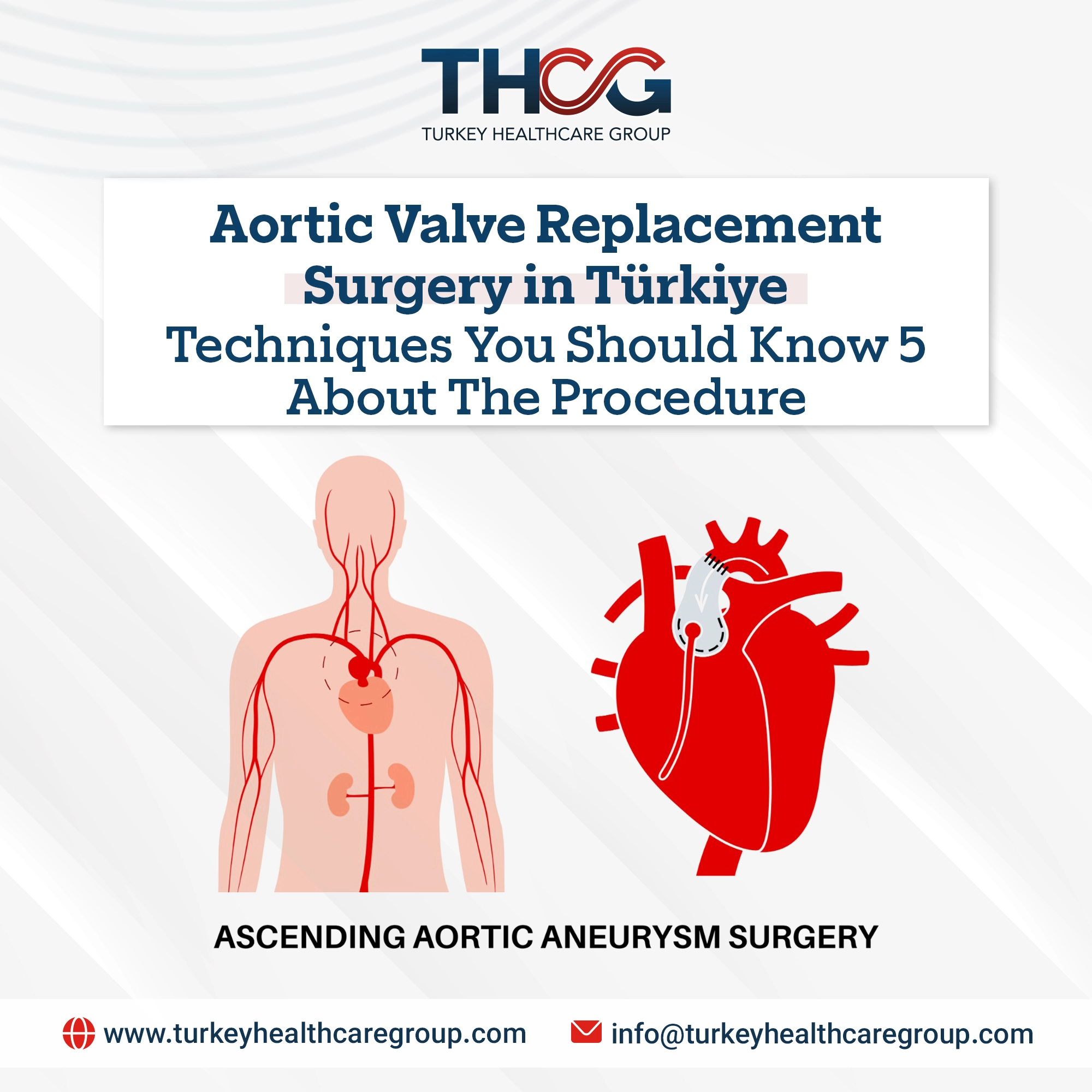
Learn everything about Aortic Valve Replacement (AVR) in Türkiye, from diagnosis to recovery. Discover 5 advanced surgical techniques, including TAVR, at Turkey Healthcare Group.
Aortic Valve Replacement Surgery in Türkiye: 5 Techniques You Should Know About The Procedure
The heart is a strong muscle that pumps blood throughout the body. It has four chambers and four valves that work together to ensure blood flows in the right direction. The valves can be compared to doors that open to allow blood to pass through and then close tightly to prevent it from flowing backward.
Heart disease is one of the leading causes of death worldwide. Among the various heart conditions people suffer from, heart valve problems, particularly aortic valve disease, are very common and can be serious if left untreated. One of the most effective treatments for severe aortic valve disease is a procedure known as Aortic Valve Replacement (AVR). In this article, we will explain everything you need to know about this life-saving surgery at Turkey Healthcare Group.
What is the Aortic Valve?
The aortic valve is one of the four valves of the heart. It is located between the left ventricle (the main pumping chamber of the heart) and the aorta (the largest artery in the body). With each heartbeat, the left ventricle contracts and pushes oxygen-rich blood into the aorta, which then carries it to the rest of the body. The aortic valve opens to allow the blood to pass through, then closes to prevent it from returning to the heart.
It may seem simple, but the aortic valve performs this function more than 100,000 times per day without rest. Therefore, it must be strong, flexible, and perfectly efficient.
What Are the Main Problems That Can Affect the Aortic Valve?
Like any other part of the body, the aortic valve can develop problems. There are two main types of aortic valve disease treated at our medical departments:
1. Aortic Stenosis
[Image of normal aortic valve versus aortic valve stenosis]
This occurs when the valve becomes narrowed or stiff and does not open fully. As a result, the heart must work harder to pump blood through the small opening. Over time, this extra effort can weaken the heart muscle and lead to heart failure.
Causes of stenosis include:
- Calcium buildup with aging (most common in older adults).
- Congenital defects (such as being born with a bicuspid valve instead of a tricuspid one).
- Rheumatic fever (a complication of untreated strep throat, more common in some developing countries).
2. Aortic Regurgitation (Insufficiency)
In this condition, the valve does not close properly, allowing blood to leak back into the heart with each beat. This means the heart has to pump the same blood twice, putting extra strain on it.
Causes include:
- Infections such as endocarditis.
- Enlargement of the aortic root (dilation at the base of the aorta).
- Connective tissue disorders (such as Marfan syndrome).
- Severe chest trauma or injury.
Both conditions reduce the heart’s ability to deliver enough blood to the body. If left untreated, they can cause symptoms such as shortness of breath, chest pain, dizziness, fatigue, or even serious complications such as heart failure or cardiac arrest.
How Do Doctors Determine When the Valve Needs to Be Replaced?
Not everyone with aortic valve disease needs surgery immediately. Some people have mild problems that cause no symptoms and can simply be monitored. However, when the condition becomes severe or symptoms appear, valve replacement is often the best solution.
Our expert doctors use several methods to determine the need for surgery:
- Clinical examination: Listening for a heart murmur (an abnormal sound) that may indicate a valve problem.
- Echocardiogram (ECHO): The most important test to evaluate the valve; it shows how well it opens and closes, how much leakage there is, and how hard the heart is working.
- Electrocardiogram (ECG): Measures the electrical activity of the heart and detects signs of strain or enlargement.
- Chest X-ray: May show an enlarged heart or fluid buildup in the lungs.
- CT scan or MRI: Provides detailed images of the heart and aorta using the latest medical technologies.
- Stress test: Evaluates how the heart responds to physical activity.
When tests show that the valve is severely damaged and the patient begins to show symptoms, or even before symptoms appear in certain high-risk cases, doctors usually recommend surgery.
What is Aortic Valve Replacement (AVR)?
Aortic valve replacement is a surgical procedure in which the damaged aortic valve is removed and replaced with a new one. The goal is to restore normal blood flow, relieve symptoms, improve quality of life, and increase life expectancy.
There are two main types of replacement valves:
Mechanical Valves
- Made from durable materials such as carbon and metal.
- Typically last a lifetime.
- Require lifelong use of blood-thinning medications (such as warfarin) to prevent clots.
Biological (Tissue) Valves
- Made from animal tissue (usually pig or cow) or from human donors.
- Usually do not require lifelong blood thinners, which is a major advantage.
- However, they have a shorter lifespan (about 10–20 years), which may require replacement later, especially in younger patients.
The choice of valve depends on the patient’s age, lifestyle, overall health, and personal preferences.
What Are the Techniques Used for Aortic Valve Replacement Surgery?
There are several approaches to replacing the aortic valve available at our hospitals:
1. Traditional Open-Heart Surgery
- The most common method, especially for patients who need additional heart procedures (such as coronary artery surgery).
- The patient is placed under general anesthesia, and the surgeon opens the breastbone (sternum) to access the heart.
- The heart is temporarily stopped, and a heart-lung machine takes over circulation.
- The damaged valve is removed, and the new valve is sewn in place.
- The sternum is closed with wires, and the skin is sutured.
- The operation usually lasts 3 to 5 hours, and patients typically stay in the hospital for 5–7 days, followed by several weeks or months of recovery.
2. Minimally Invasive Surgery
- Performed through smaller incisions (between the ribs or on the side of the chest).
- Results in less pain, faster recovery, and lower risk of infection.
- However, it is not suitable for all patients.
3. Transcatheter Aortic Valve Replacement (TAVR)
- A medical breakthrough, especially for elderly or high-risk patients.
- A folded artificial valve is delivered through a catheter inserted into the femoral artery (in the groin) or chest.
- Once it reaches the heart, the new valve is expanded, pushing the old one aside and taking its place.
- The procedure takes 1–3 hours, and many patients are discharged within 2–3 days.
- TAVR is now even available for low-risk patients in many centers.
4. Robotic Surgery
- Performed through very small incisions, resulting in less pain, faster recovery, and high precision when dealing with complex valve conditions, while minimizing potential risks.
- Suitable for patients who need traditional aortic valve replacement but prefer a less invasive option and have the physical ability to undergo surgery.
- Duration: Usually between 3 and 5 hours, depending on the patient’s condition and the complexity of the procedure.
- Combines the safety of open-heart surgery with advanced precision technology, helping reduce complications and accelerate the return to normal life.
5. Valve-in-Valve Procedure
- No need to open the chest, less pain, shorter hospital stay, faster recovery compared to traditional surgery, and quick restoration of heart function.
- Ideal for patients who already have a biological valve that has worn out years after the initial surgery, or for those unable to undergo open-heart surgery due to age or medical condition.
- Duration: Usually between 1 and 3 hours, depending on the valve’s location and the complexity of the case.
- An innovative and effective solution that allows valve replacement without open-heart surgery, ensuring greater patient safety and comfort.
Who Needs Aortic Valve Replacement Surgery?
Aortic valve replacement is not necessary for everyone with valve problems. Doctors determine the need for surgery based on several factors related to the patient’s condition and heart function. The procedure is usually recommended when the valve disorder causes bothersome symptoms or when the disease poses a risk to heart health.
The main goal of timely valve replacement is to relieve symptoms, protect the heart from damage, and improve long-term quality of life. The decision depends on:
- Severity of the disease: Mild cases may only require monitoring, while severe cases need intervention.
- Symptoms: Such as shortness of breath, chest pain, dizziness or fainting, fatigue, or swelling of the legs.
- Heart function: If tests show that the heart muscle is weakening, surgery is recommended promptly.
- Age and overall health: Younger, healthier patients may benefit from a mechanical valve, while older patients or those with other health issues may benefit more from TAVR.
What Are the Complications of Aortic Valve Replacement?
Like any major surgery, aortic valve replacement carries some risks. However, for most patients, the benefits far outweigh the risks, especially since the alternative may be progressive heart failure or sudden death.
Possible complications include:
- Bleeding
- Infection (including endocarditis, an infection of the heart valve)
- Blood clots, which may lead to stroke
- Heart rhythm disturbances (such as atrial fibrillation)
- Valve failure (if the new valve becomes damaged or develops a problem)
- Kidney problems
- Memory or thinking changes (more common in older adults after open-heart surgery)
Thanks to modern techniques and experienced medical teams, serious complications are rare. The mortality rate for aortic valve replacement is typically around 1%–3% in standard cases and even lower for TAVR in appropriately selected patients.
Life After Aortic Valve Replacement
After aortic valve replacement, most patients experience a significant improvement in their health and daily activity levels, as symptoms such as shortness of breath, fatigue, and exhaustion gradually disappear. However, recovery takes time and patience.
Hospital Stay
After surgery, you will spend several days in the hospital. Initially, you will stay in the Intensive Care Unit (ICU). Once your condition stabilizes, you’ll move to a regular hospital room where you will begin to perform light activities, manage pain, and start physical therapy.
Recovery at Home
Returning home is a major milestone, but recovery continues for several weeks or months. Key aspects include keeping the incision site clean, taking prescribed medications, and participating in cardiac rehabilitation.
Living with a New Aortic Valve
After full recovery, most patients can lead normal, active, and healthy lives. Long-term care is essential, including regular follow-ups, good oral hygiene, and a healthy lifestyle.
Advances in Aortic Valve Replacement
Aortic valve replacement surgery has seen major advances, making treatment today safer, easier, and more effective. You can read more about our surgical breakthroughs in our Achievements and Medical Articles section.
Who Performs the Surgery?
Traditional surgery is performed by a specialized cardiothoracic surgeon. For TAVR, a multidisciplinary “Heart Team” is involved, ensuring optimal treatment. Patients can access medical advice seamlessly via our Online Services.
Prevention and Heart Health
While some valve problems are due to congenital defects or aging, others can be prevented or delayed by adopting a heart-healthy lifestyle, including eating a balanced diet, engaging in regular physical activity, and avoiding smoking.
Why Choose Turkey Healthcare Group for Aortic Valve Replacement?
At Turkey Healthcare Group, aortic valve replacement procedures are performed by a team of top cardiovascular and thoracic surgeons in Turkey, experts with extensive experience managing complex and high-risk cases.
Combining medical expertise with cutting-edge technology, the center offers a wide range of treatment packages tailored to each patient’s unique situation, whether through traditional open-heart surgery, minimally invasive procedures, or the revolutionary TAVR catheter-based technique.
The hospitals within Turkey Healthcare Group are equipped with state-of-the-art intensive care units and advanced operating theaters. If you or a loved one needs expert cardiac care, contact us today to schedule a consultation with our specialists.
For more updates and patient stories, visit our Media Center.
Frequently Asked Questions (FAQs) About Aortic Valve Replacement
1. What is the main function of the aortic valve?
The aortic valve acts as a door that opens to let oxygen-rich blood flow from the left ventricle into the aorta, and closes tightly to prevent blood from flowing backward into the heart.
2. What is Aortic Stenosis?
Aortic stenosis is a condition where the valve becomes narrowed or stiff, preventing it from opening fully. This forces the heart to work harder to pump blood, which can eventually lead to heart failure.
3. What are the common causes of Aortic Stenosis?
The most common causes include calcium buildup due to aging, congenital defects (like being born with a bicuspid valve), and rheumatic fever.
4. What is Aortic Regurgitation?
Also known as aortic insufficiency, this occurs when the valve does not close properly, allowing blood to leak back into the heart. The heart then has to pump the same blood twice.
5. What are the symptoms of a failing aortic valve?
Symptoms usually include shortness of breath, chest pain, dizziness, fainting, severe fatigue, and swelling in the legs.
6. How do doctors diagnose aortic valve disease?
Diagnosis is made using clinical exams (listening for heart murmurs), Echocardiograms (ECHO), Electrocardiograms (ECG), Chest X-rays, CT/MRI scans, and stress tests.
7. Does everyone with aortic valve disease need surgery?
No. Mild cases without symptoms can be monitored regularly. However, when the condition becomes severe and symptoms appear, valve replacement is highly recommended.
8. What are the two main types of replacement valves?
The two main types are Mechanical Valves (made from carbon and metal) and Biological or Tissue Valves (made from animal or human donor tissue).
9. What is the main advantage of a mechanical valve?
Mechanical valves are extremely durable and typically last a lifetime, meaning you likely won’t need a second valve replacement. However, they require lifelong blood-thinning medications.
10. Do biological valves require lifelong blood thinners?
Usually, no. This is their major advantage. However, they have a shorter lifespan (about 10 to 20 years) and may need to be replaced eventually.
11. What happens during traditional open-heart AVR surgery?
Under general anesthesia, the surgeon opens the breastbone, temporarily stops the heart using a heart-lung machine, removes the damaged valve, and sews the new valve into place.
12. What is TAVR (Transcatheter Aortic Valve Replacement)?
TAVR is a minimally invasive procedure where a folded artificial valve is delivered to the heart through a catheter inserted in the groin or chest, expanding and replacing the old valve without open-heart surgery.
13. Who is the best candidate for Robotic Valve Surgery?
Robotic surgery is ideal for patients who need traditional valve replacement but prefer a less invasive option with smaller incisions, less pain, and faster recovery, provided they are physically fit for surgery.
14. What is the Valve-in-Valve procedure?
It is an innovative technique used when a previously implanted biological valve wears out. A new valve is inserted inside the old one via a catheter, avoiding a second open-heart surgery.
15. Are there risks associated with AVR surgery?
Like any major surgery, risks include bleeding, infection, blood clots, rhythm disturbances, and kidney issues. However, modern techniques have reduced the mortality rate to around 1%–3% in standard cases.
16. How long will I stay in the hospital after surgery?
Patients typically stay for 4 to 7 days after traditional open-heart surgery, and only 1 to 3 days after a minimally invasive TAVR procedure.
17. What is cardiac rehabilitation?
It is a customized outpatient program involving exercise and education designed to help you recover faster, regain strength, and improve your long-term heart health after surgery.
18. Why is dental hygiene important after valve replacement?
Good dental hygiene prevents mouth bacteria from entering the bloodstream and causing a serious infection in the new heart valve (endocarditis). You may also need antibiotics before dental work.
19. Is it dangerous to delay aortic valve surgery?
Yes. Severe aortic valve disease can lead to progressive heart failure or sudden death. Early intervention, once symptoms appear, drastically improves survival and quality of life.
20. Why choose Turkey Healthcare Group for this procedure?
Turkey Healthcare Group offers world-class cardiovascular surgeons, advanced medical technologies like TAVR and 3D surgical planning, and comprehensive patient care from diagnosis to full recovery.
